
 English
 Dansk
 Svenska
 Deutsch
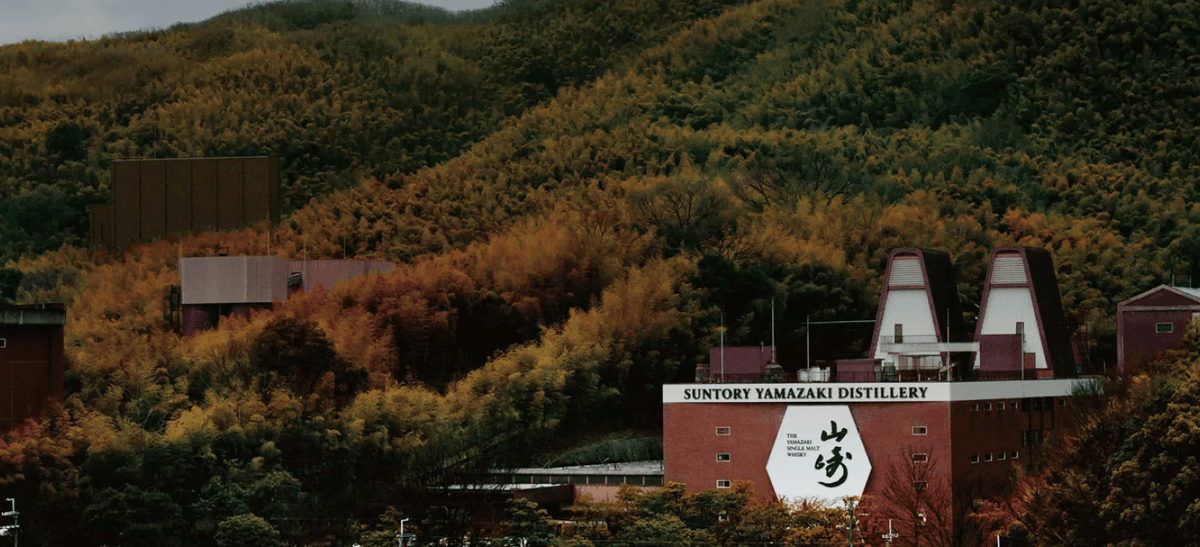
Suntory: Japan's first malt whisky producer
Suntory is the Japanese producer that founded Japan's first malt whisky distillery, Yamazaki, in 1923. Behind the brand is the House of Suntory, which today makes some of the world's most sought-after whiskies: Yamazaki, Hakushu, Hibiki, Chita and Toki. What they have in common is a flavour profile developed from the start for the Japanese palate: elegant, balanced and precise.
| Facts | Suntory |
|---|---|
| Founded | 1899 in Osaka by Shinjiro Torii |
| First whisky distillery | Yamazaki, construction began in 1923 |
| Distilleries | Yamazaki (malt), Hakushu (malt), Chita (grain) |
| Well-known whiskies | Yamazaki, Hakushu, Hibiki, Chita, Toki, Kakubin |
| Owner | Suntory Holdings; the international spirits business is called Suntory Global Spirits |
| Hallmark | Its own Mizunara casks of Japanese oak and blending of many whisky types from its own distilleries |
Suntory's history: from port wine in Osaka to world-class Japanese whisky
Suntory's history begins in 1899, when Shinjiro Torii opened the shop Torii Shoten in Osaka. Torii had learned the trade as an apprentice at a pharmaceutical wholesaler, and in 1907 he launched the sweet wine Akadama Port Wine, which he had blended himself.
The big bet came in 1923. That year construction began on the Yamazaki distillery outside Kyoto, Japan's first malt whisky distillery. The first whisky, Suntory Shirofuda ("white label"), came onto the market in 1929 but was not a success. The lesson was that the whisky had to suit the Japanese palate. That succeeded with Kakubin in 1937, which according to Suntory is still Japan's best-selling whisky by value.
Torii's son Keizo Saji (he bore his mother's family name) became Suntory's second master blender in 1961. He founded the Chita distillery in 1972, and the following year Hakushu followed in the Japanese Southern Alps. Then came the whiskies that define the brand today:
- 1984: Yamazaki Single Malt
- 1989: Hibiki, launched for Suntory's 90th anniversary
- 1994: Hakushu Single Malt
- 2016: Chita Single Grain and Toki
- 2019: Ao World Whisky
In 2002 Shingo Torii, grandson of the founder, became the house's third master blender. In 2014 Suntory acquired the American company Beam Inc., and in April 2024 the international spirits business changed its name from Beam Suntory to Suntory Global Spirits. Today the company is also behind brands such as Laphroaig, Bowmore, Maker's Mark, Roku Gin and Haku Vodka.
Suntory's three distilleries: Yamazaki, Hakushu and Chita
Suntory owns three whisky distilleries in Japan, and each one produces its own style. It is precisely the combination of the three that makes it possible to create blends such as Hibiki and Toki exclusively from its own whisky.
| Distillery | Founded | Location | Type | Style |
|---|---|---|---|---|
| Yamazaki | 1923 | At the foot of Mount Tennozan, outside Kyoto | Malt whisky | Rich, complex and fruity; matured in American oak, sherry casks and Mizunara, among others |
| Hakushu | 1973 | In the forests at Mt. Kaikomagatake in the Japanese Southern Alps, more than 700 m above sea level | Malt whisky | Fresh, green and herbal with light smoke |
| Chita | 1972 | The Chita Peninsula in Aichi Prefecture, near the sea | Grain whisky (mainly corn) | Mild, light and clean; used as the base in Suntory's blends |
Yamazaki: where Japanese whisky was born
Shinjiro Torii chose the location at Tennozan because of the good water. Suntory itself calls Yamazaki "Japan's first and oldest malt distillery". The whiskies mature in American, Spanish and Japanese Mizunara oak, which gives the layered, fruity style Yamazaki is known for.
Hakushu: the distillery in the forest
Hakushu lies high in the mountains and, according to Suntory, is one of the highest distilleries in the world. The water is soft mountain water from rain and snow, filtered through granite. Fermentation takes place in wooden washbacks. The result is a fresh, "green" whisky with a light smoky edge.
Chita: the cornerstone of the blends
Chita makes grain whisky in continuous column stills, mainly from corn. Suntory describes the Chita whisky as the house's "dashi": the base that ties the flavours together in blends such as Hibiki and Toki.
Suntory's whisky ranges: Yamazaki, Hakushu, Hibiki, Chita and Toki
Suntory's whiskies fall into two groups: single malts and single grain from one distillery, and blends that combine whisky from all three.
| Range | Type | Selected expressions | Flavour profile (according to Suntory) |
|---|---|---|---|
| Yamazaki | Single malt | Distiller's Reserve, 12, 18, 18 Mizunara, 25 | Distiller's Reserve: mild, slightly sweet with red berries. 18 years: dried fruit and chocolate |
| Hakushu | Single malt | Distiller's Reserve, 12, 18, 25, 18 Peated Malt | 12 years: lightly peated with green notes, fresh fruit and soft smoke |
| Hibiki | Blend (malt + grain) | Japanese Harmony, 21, 30 | Blend of whisky from Yamazaki, Hakushu and Chita with a focus on harmony and balance |
| Chita | Single grain | Chita Single Grain | Mild and soft with a clean, clear finish |
| Toki | Blend (malt + grain) | Toki | Silky smooth with a subtle sweet and spicy finish; made for highballs |
Yamazaki
Yamazaki is Suntory's flagship and the single malt Suntory itself calls "Japan's No.1 single malt whisky". Yamazaki won the title Supreme Champion Spirit at the International Spirits Challenge in 2023 (25 years), 2024 (12 years) and 2025 (18 years). Start with Yamazaki 12 Years Old if you want to get to know the house style. If you want to go a step further, try Yamazaki 18 Years Old or Yamazaki 18 Years Mizunara Cask.
Hakushu
Hakushu is the choice if you like fresh, herbal whisky with a hint of smoke. It is a good bridge for those who usually drink lightly peated Scotch whisky. See Hakushu 18 Years Old 100th Anniversary Edition.
Hibiki
Hibiki was launched in 1989 for Suntory's 90th anniversary. The name means "resonance" in Japanese. The bottle has 24 facets, one for each of the 24 Japanese micro-seasons, and the label is made of Echizen washi paper. According to Suntory, the chief blender tastes more than 100 malt whisky samples from each distillery to put together a Hibiki. See Hibiki Japanese Harmony, Hibiki 21 Years Hiroshi Senju and the full Hibiki collection.
Chita
Chita Single Grain is Suntory's first single grain whisky. It matures in American white oak, Spanish oak and wine casks. It is light and approachable and works both neat and in a highball. See Suntory Chita.
Toki
Toki blends malt and grain from all three distilleries: lightly peated Hakushu for freshness, grain from Chita for softness and Spanish-oak Yamazaki for spice and depth. Suntory recommends it in a highball with lemon or grapefruit peel. See Toki Suntory Whisky.
What makes Suntory whisky special?
Three things set Suntory apart from most other whisky producers: blending for the Japanese palate, Mizunara oak and the water at the distilleries.
Flavour developed for the Japanese palate. Suntory's first whisky, Shirofuda from 1929, sold poorly. Shinjiro Torii learned that the whisky had to suit Japanese food and taste. Since then the goal has been balance and elegance rather than power.
Blending with its own whisky. In Scotland, distilleries often trade whisky with one another. Suntory instead makes many different whisky types at its own distilleries, using different stills, yeasts and casks. The chief blender therefore has a large library from which to build blends, and the Chita grain whisky acts as the house's "dashi", the base that ties the flavours together.
Mizunara: the Japanese oak. Suntory began using Mizunara oak in the mid-20th century, when it was difficult to import casks. The wood is porous and hard to work with, and the trees must be more than 200 years old before they are fully grown. According to Suntory, Mizunara makes up less than 1% of the house's casks. The flavour only emerges after at least 15 years of maturation and gives notes of sandalwood, coconut and incense.
Water and nature. Yamazaki lies at Tennozan, chosen for its water, and Hakushu uses soft mountain water filtered through granite. Japan's distinct seasons also influence maturation.
Which Suntory whisky should you choose?
Choose by taste and occasion. Here is a quick overview:
| You like … | Choose | Why |
|---|---|---|
| Highballs and drinks | Toki or Chita | Light, soft and made to be mixed with soda water |
| Fruity, rounded whisky, e.g. sherry-matured Scotch | Yamazaki 12 | Fruit, sweetness and complexity |
| Fresh, herbal whisky with a little smoke | Hakushu 18 | Green notes and peat |
| An elegant gift | Hibiki Japanese Harmony | Iconic bottle and a soft, rounded blend |
| Something special for the collection | Yamazaki 18 or Hibiki 21 | Long maturation; Yamazaki 18 Mizunara showcases the Japanese oak |
Serving tip: Japanese whisky is often drunk as a highball: whisky over ice in a tall glass, topped with cold soda water and a piece of lemon or grapefruit peel. Single malts such as Yamazaki 18 are best enjoyed neat or with a few drops of water.
Frequently asked questions about Suntory
Who owns Suntory whisky?
Suntory whisky is owned by the Japanese group Suntory Holdings. The international spirits business is called Suntory Global Spirits and was called Beam Suntory until April 2024.
Are Yamazaki and Suntory the same?
No. Suntory is the producer, and Yamazaki is both the name of Suntory's oldest distillery and of the single malt made there. Suntory also makes Hakushu, Hibiki, Chita and Toki.
What is the difference between Suntory and Nikka?
Suntory and Nikka are two different Japanese whisky producers. Nikka was founded by Masataka Taketsuru, who previously worked for Suntory at the Yamazaki distillery, and is owned today by Asahi.
What does Hibiki mean?
Hibiki means "resonance" in Japanese. Hibiki is Suntory's blend of whisky from Yamazaki, Hakushu and Chita.
Which Suntory whisky is best for beginners?
Toki is the most approachable choice and is particularly well suited to highballs. If you want to taste a single malt, Yamazaki 12 is the classic starting point.
What is Mizunara oak?
Mizunara is a Japanese oak species that Suntory uses for casks. It gives notes of sandalwood, coconut and incense, but requires long maturation and makes up less than 1% of Suntory's casks.
What is Japan's best-selling whisky?
According to Suntory, Kakubin, launched in 1937, is Japan's best-selling whisky by value.
Why is Japanese whisky often hard to get hold of?
For many years, demand for age-stated Japanese whiskies has exceeded stocks. That is why expressions such as Yamazaki 18 and Hibiki 21 can be limited and expensive.
See our full range from Suntory or explore all Japanese whisky.
Sources: House of Suntory – Heritage, House of Suntory – Mizunara, Suntory Global Spirits.


